
Gwinnett County Criminal History Checks
No single Gwinnett County search produces a complete criminal history. Choose the source by record type. The Clerk's case-search gateway leads to the account-gated Tyler Odyssey portal for Superior, State, Magistrate, and certain Probate matters. Recorder's Court uses a separate search. The sheriff's Jail View shows recent or current county custody. A GCPD counter supplies a person's Georgia history, while the statewide Georgia Felon Search is limited to public in-state felony conviction information.
Gather the full legal name, spelling variants, date of birth when a system permits it, and any case, citation, incident, or booking number. A matching name is a lead, not proof of identity. Compare the court, filing year, agency, charge, and final disposition before relying on a record.
- Decide whether the target is a court case, booking, police report, warrant, registry entry, or personal Georgia history.
- Search the creating office first, using a case or booking number when available.
- Compare identifying fields and dates instead of assuming that a name match is correct.
- Open the docket or request the underlying report to learn what happened after the first entry.
- Order a certified copy or fingerprint-based check when an official record is required.
Four Gwinnett Records Doorways
Gwinnett's records map is split by legal custody. The county Open Records Portal accepts requests for listed departments, including Police, Sheriff, Corrections, District Attorney, Solicitor, and Recorder's Court. It expressly excludes the Clerk's Superior, State, and Magistrate files. Those requests belong with the Clerk. City police records remain with the city that created them.
| Need | Start here | Fallback |
|---|---|---|
| Filed criminal case | Gwinnett Courts Portal or Recorder's Court search | Clerk at 770-822-8100 |
| Recent booking | Sheriff Jail View | Jail main line, then GDC if transferred |
| Police report | Creating police agency or county portal | Agency records counter |
| Personal Georgia history | GCPD Records/GCIC service | Fingerprint channel when required |
The official county open-records page shows this routing distinction.
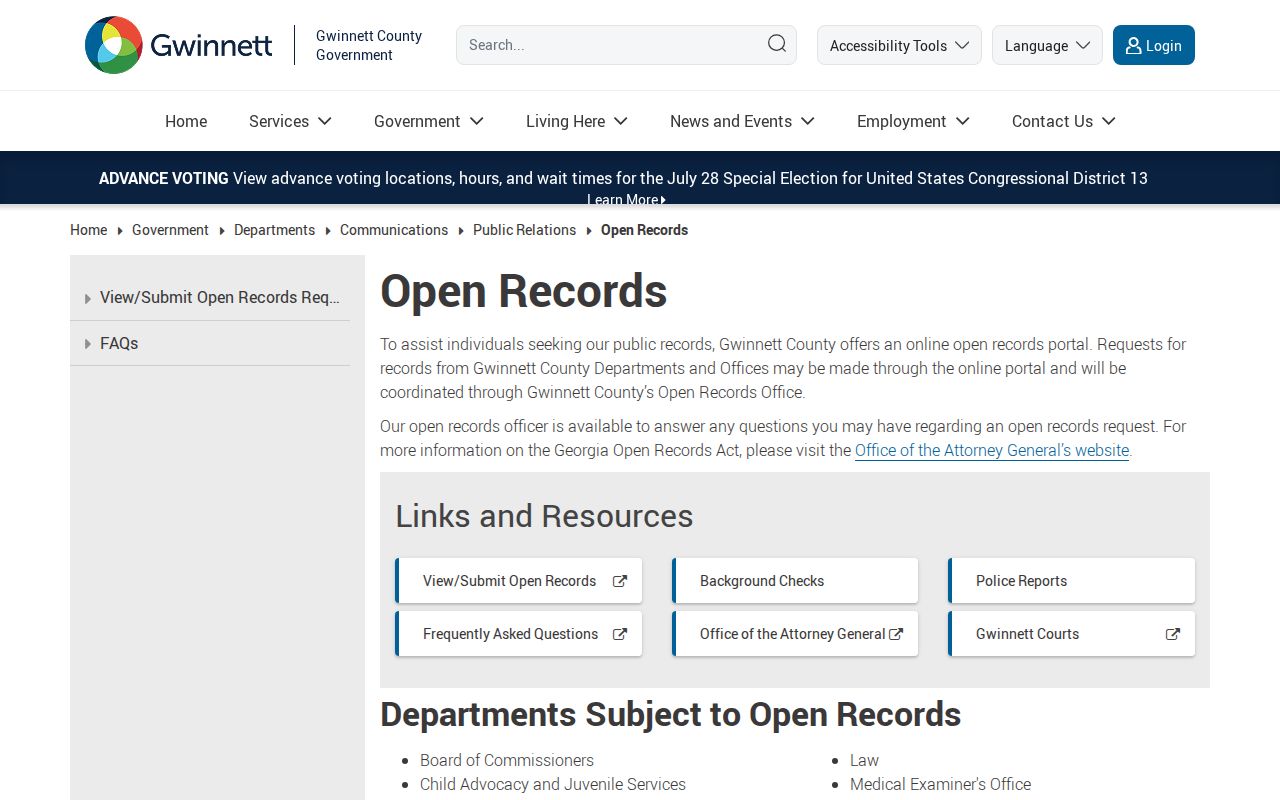
The portal image reinforces a basic rule: send a request to the department that owns the file, not merely to the county office nearest the event.
Official Background Checks in Georgia
For self-review, Gwinnett County Police provides a $20 Georgia criminal history. The applicant signs the required waiver and presents accepted government identification and an SSN. The product is Georgia-only. GCPD directs people seeking out-of-state history to the FBI. If a history is released to another named person, the original notarized waiver must identify that recipient, who must present matching identification.
The Georgia Crime Information Center, part of the Georgia Bureau of Investigation, maintains the state repository.
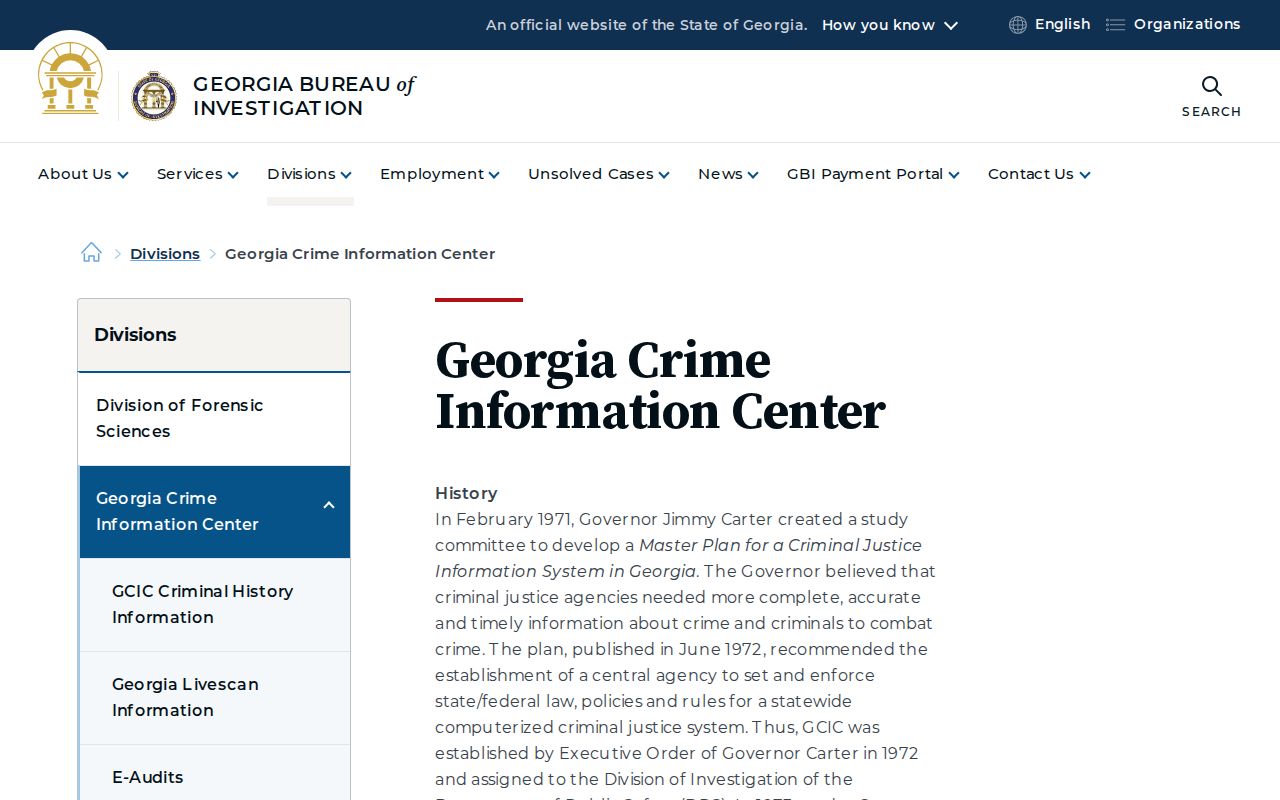
GCIC records connect fingerprint-supported Georgia arrest cycles with dispositions submitted by courts and prosecutors. Georgia Felon Search is different: it uses name, race, sex, and date of birth and returns public Georgia felony-conviction data, not a complete national history.
GAPS Fingerprints at IdentoGO
Fingerprint cards are available through GCPD's Innovation Square service for $10 per card. Groups of three or more and fingerprint customers should schedule ahead. Georgia Applicant Processing Service, or GAPS, uses IdentoGO for checks required by an authorized Georgia program. The applicant needs the requesting agency's service code, schedules capture, and brings valid photo identification. Results go through the authorized program rather than functioning as a public rap-sheet search.
The official GAPS and IdentoGO appointment site is the correct starting point when a statute or agency requires fingerprints.
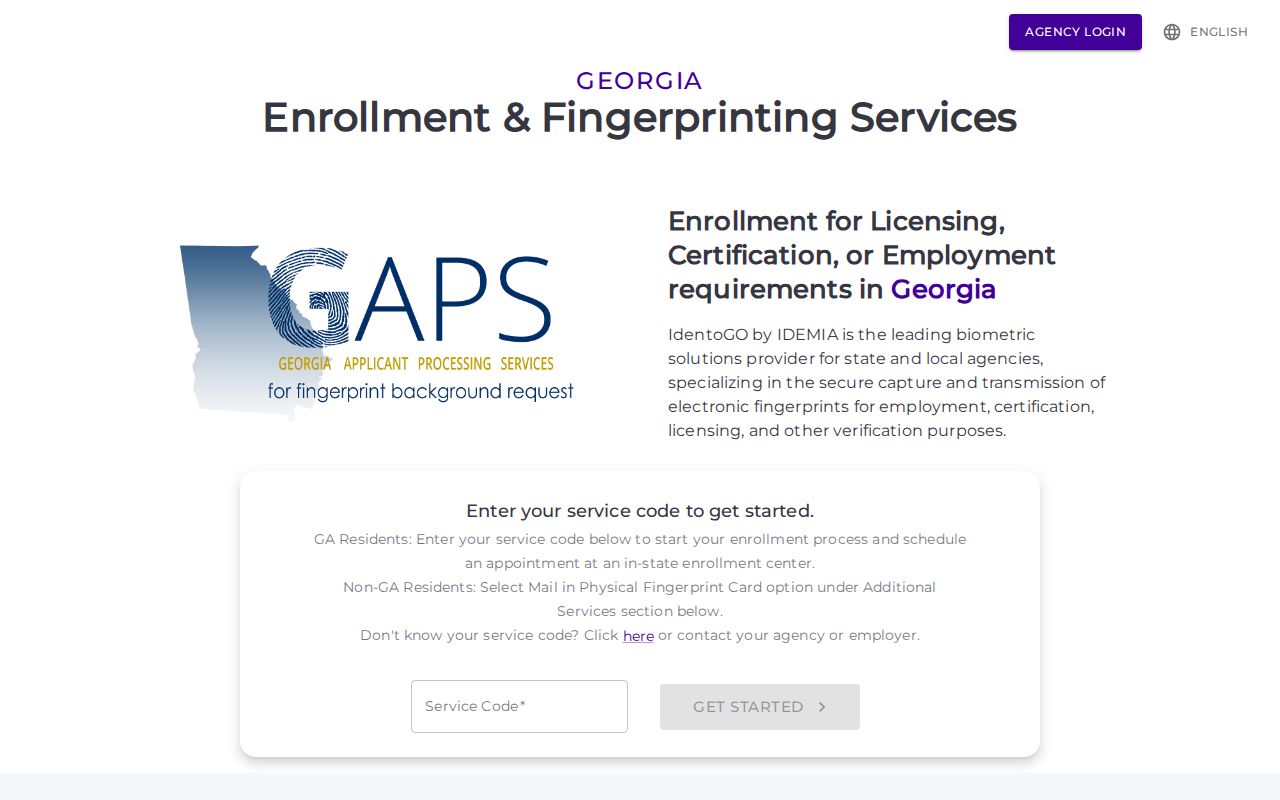
For a personal national Identity History Summary, use the FBI's subject-only electronic request rather than treating GAPS as a general public search.
Kinds of Criminal Records
Each Gwinnett County criminal record captures a different stage. Police document an event. The jail documents intake. Prosecutors and grand juries create charging records. Courts record hearings and outcomes. GCIC assembles statewide identity-linked arrest cycles and submitted dispositions. The differences explain why one portal may show a booking while another has no filed case yet.
- Incident and arrest reports describe the event and officer action, subject to redaction.
- Booking records show intake, charge, bond, and custody status, not guilt.
- Court files contain dockets, pleadings, orders, disposition, and sentence.
- Warrant records may appear through a court or law-enforcement channel, but sealed or unserved warrants may not be confirmed publicly.
- Custody and supervision records split among the county jail, Georgia Department of Corrections, and Georgia Department of Community Supervision.
Gwinnett Court Accounts and Copies
Since March 3, 2023, the Tyler Odyssey portal has required every user to create a free account. It also requires JavaScript, cookies, and a current supported browser. Searchers should enter through the official Gwinnett courts gateway, select the correct venue, and verify the filing year and case number. Recorder's Court citations sit behind a different door and can include matters initiated by GCPD, the Sheriff, Georgia DDS, GDOT, and county ordinance enforcement.
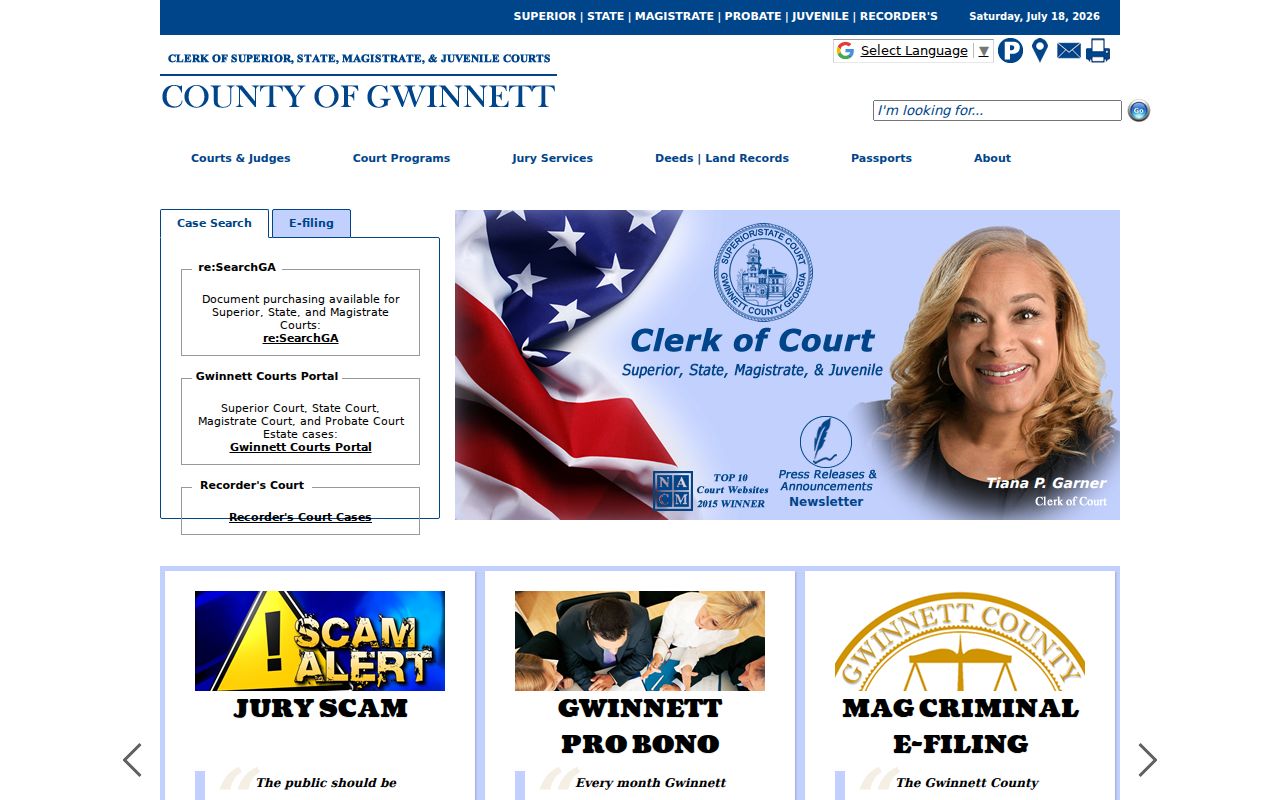
The court gateway leads to dockets and document services. Certified Superior Court copies are listed at $2.50 for the first page and $1 for each later page; plain copies are listed at $1 per page. Confirm the charge for a particular criminal filing with the Clerk.
Note: The county Open Records Portal cannot replace the Clerk for Superior, State, or Magistrate court files.
Gwinnett County Criminal Records: What They Contain
A Georgia history can include identity data, arresting agency, arrest date, charges, final judicial dispositions, and Georgia correctional custody information. A Gwinnett court file focuses on case number, parties, charges, hearings, filings, disposition, sentence, and financial entries. Jail profiles focus on current custody, bond, and booking charges. Sensitive identifiers, victim information, juvenile material, and sealed filings are withheld or redacted.
| Name & Identifiers | Name, aliases, date of birth and physical descriptors as lawfully displayed. |
|---|---|
| Arrest / Booking Data | Agency, arrest date, booking number, intake date, charge, bond, and custody status. |
| Charges & Statutes | Filed count, offense description, statute, offense date, and charging instrument. |
| Disposition | Dismissed, nolle prossed, no bill, acquitted, First Offender result, or conviction. |
| Sentence | Custody, probation, fines, restitution, and concurrent or consecutive terms when public. |
| Custody / Supervision | County jail, state correctional status, or public community-supervision fields. |
County Jail or State Prison?
The Gwinnett Sheriff Jail View covers county custody, mainly recent and pretrial bookings plus eligible local sentences. Search fields include first, middle, and last name, booking or release date ranges, result type, sorting field, and order. A profile can show booking number, booking date, custody status, total bond, holds, charges, court, case number, warrant or citation number, and arresting officer.
After state commitment, search the Georgia Department of Corrections Find an Offender system. VINELink can add custody notifications. The Gwinnett County Correctional Complex is distinct from the jail and houses sentenced participants, including work programs. One person may therefore move from a city arrest to county booking, a court case, the correctional complex, and a GDC record without one system showing the entire path.
Read booking data carefully. A jail charge records the basis for custody and may change after prosecutor review. It is not proof of conviction.
Georgia Public Access Laws
The Georgia Open Records Act presumes access to agency records, with exemptions. An agency generally responds within three business days by producing available records, giving a timetable and cost estimate, or citing a lawful reason for withholding. Three business days is a response framework, not a promise that a large or redaction-heavy request will be produced within that span.
The Georgia Attorney General's open-government guidance explains the public framework.
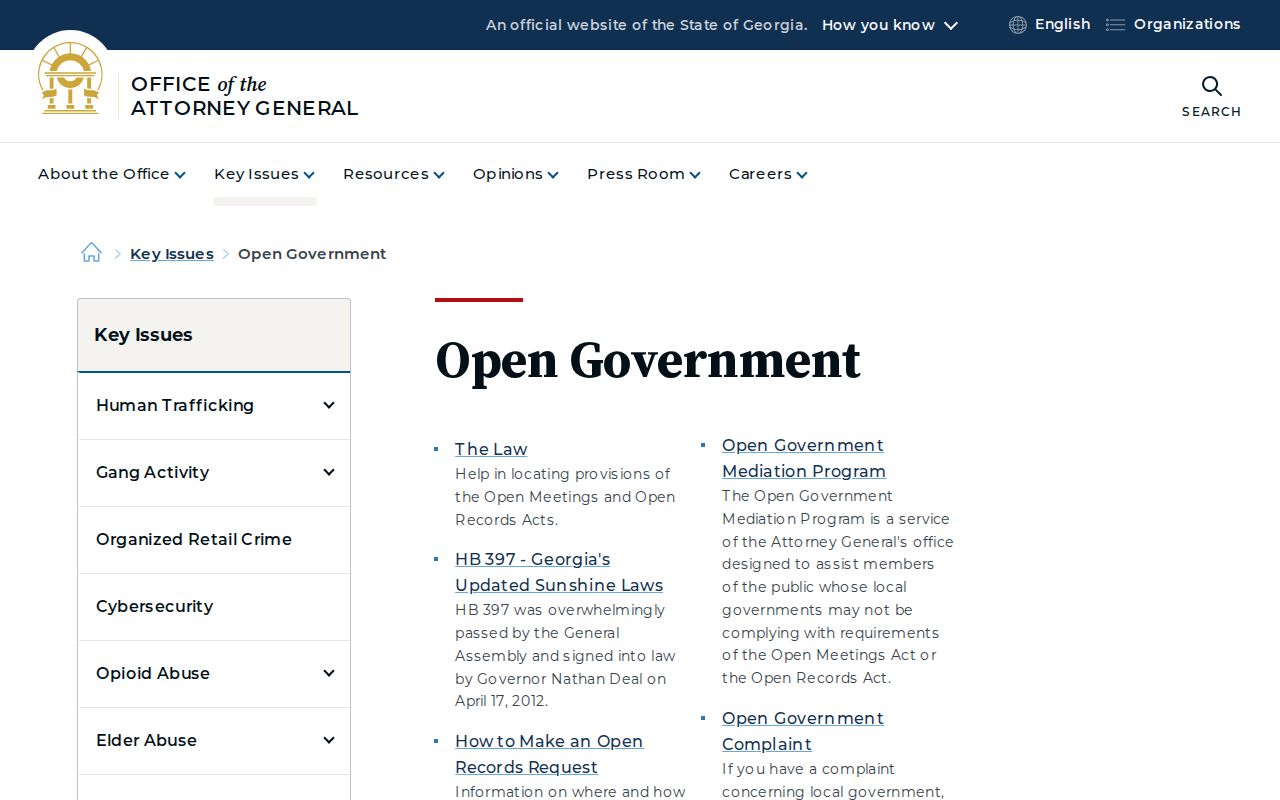
Active investigations, juvenile records, protected victim data, security information, and personal identifiers can be withheld or redacted even when the surrounding event is public.
Key statutes:
O.C.G.A. §§50-18-70–77 establish open-record access and the response framework.
O.C.G.A. §35-3-35 governs noncriminal-justice dissemination of Georgia histories.
O.C.G.A. §35-3-37 provides restriction and related sealing routes.
O.C.G.A. §42-1-12 governs registry information and operation.
GCPD Records Behind the Screen
Gwinnett County Police Records/GCIC does more than hand out reports. Its records functions support wanted, missing-person, stolen-property, and criminal-history systems around the clock, while public counters use business hours. Seven GCPD locations provide hard-copy report pickup on weekdays. Electronic delivery requires an open-records request. Incident reports average ten cents per page and often total fifty cents or less; victims may receive some reports without charge. Crash reports are $5 in person.
The GCPD Police Services page identifies the available records and background-check routes.
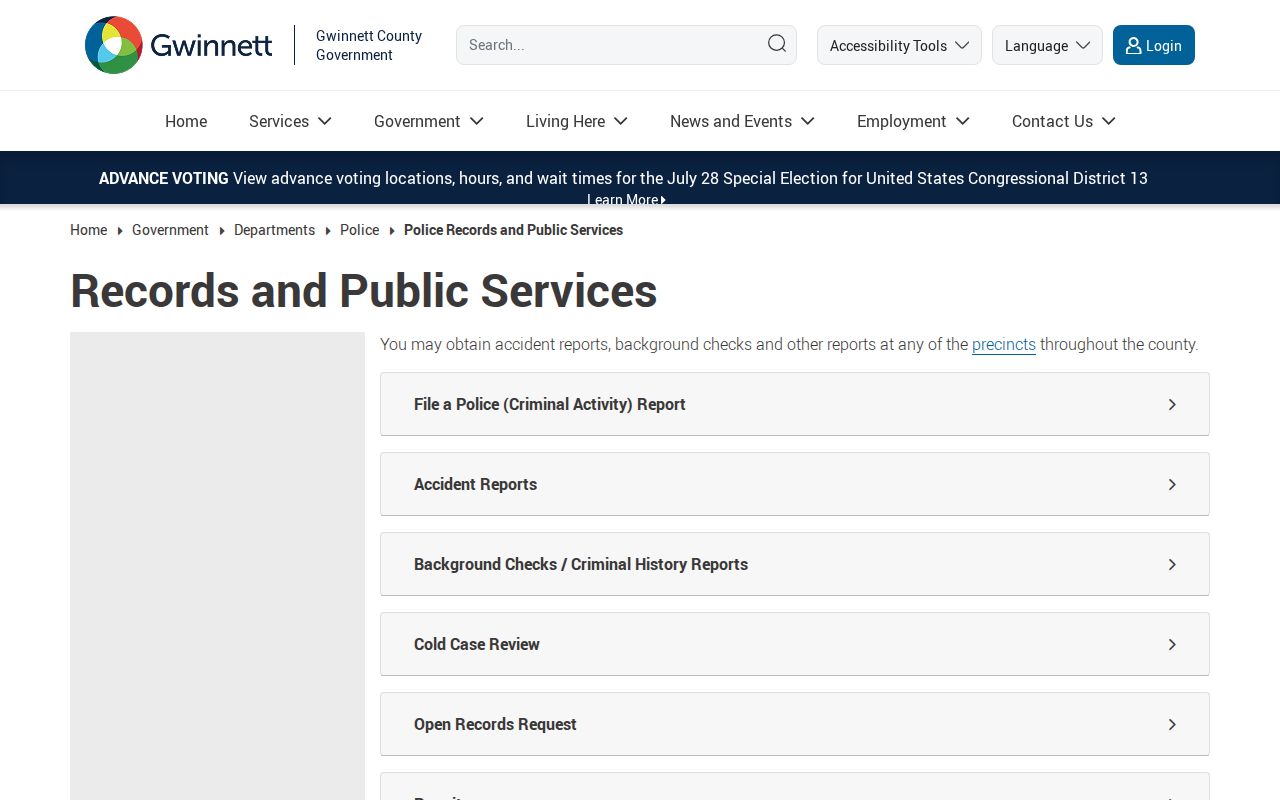
Requests should name the agency and record type, give an incident number if known, describe the date and location, and ask for electronic delivery when practical. Large media, retrieval, and redaction work may produce an estimate.
| Service | Published amount |
|---|---|
| GCPD Georgia criminal history | $20 |
| Fingerprint card | $10 per card |
| Crash report in person | $5 |
| Incident report | About $0.10 per page; some victim copies free |
Gwinnett Warrant Checks Need Context
Gwinnett does not promise that one public warrant list is complete. The Sheriff may hold county warrant information, while the Clerk docket can show a bench warrant or capias in a filed case. Municipal and Recorder's Courts control failure-to-appear warrants in their own matters. Magistrate Court is central to arrest-warrant issuance. Sealed or operational warrants may remain undisclosed until execution.
A docket entry may identify the issuing court, case or warrant number, charge, issue date, status, and bond. Online status can lag a clearance. Anyone who believes a warrant exists should contact the issuing court or counsel about surrender, calendar restoration, and bond instead of arriving unexpectedly at a records counter. Only the issuing authority can confirm resolution.
- Bench warrant
- A judge's order, often issued after a failure to appear or obey a court direction.
- Arrest warrant
- A judicial order to arrest based on a probable-cause finding.
- Capias
- A court command directing that a person be taken into custody or brought before the court.
Restricted, Sealed & Expunged Records
Georgia uses the term record restriction. Restriction does not destroy the official record. It limits ordinary disclosure of qualifying GCIC arrest-cycle information to private persons and businesses, while criminal-justice and judicial access remains. Dismissal, no bill, nolle prosequi, dead docket, or no further action may qualify under the basic nonconviction route. A guilty disposition generally does not, although other Georgia provisions cover specified circumstances.
For arrests before July 1, 2013, the applicant usually starts with the arresting agency, which sends the form to the prosecutor. For later felony arrests, Gwinnett's District Attorney offers an application route. State Court misdemeanor matters go to the Solicitor-General. A denial may be appealed to Superior Court within 30 days. GCIC commonly processes a complete approved application in two to three weeks.
Restricting the GCIC history does not automatically seal the courthouse file. Separate court-paper sealing may require a petition and judicial order. Before applying, obtain the history and make sure each charge has a correct final disposition. Keep the completion letter and recheck both state history and court results.
Three Lawrenceville Records Campuses
GJAC at 75 Langley Drive is the main counter and courtroom complex for county trial-court files. The Sheriff and Jail campus at 2900 University Parkway handles custody and sheriff matters. GCPD's Innovation Square office at 446 West Crogan Street provides histories and fingerprint cards. Recorder's Court sits separately at 115 Stone Mountain Street. A Lawrenceville mailing address does not make these offices interchangeable.
The county's official directions page describes access to the justice complex.
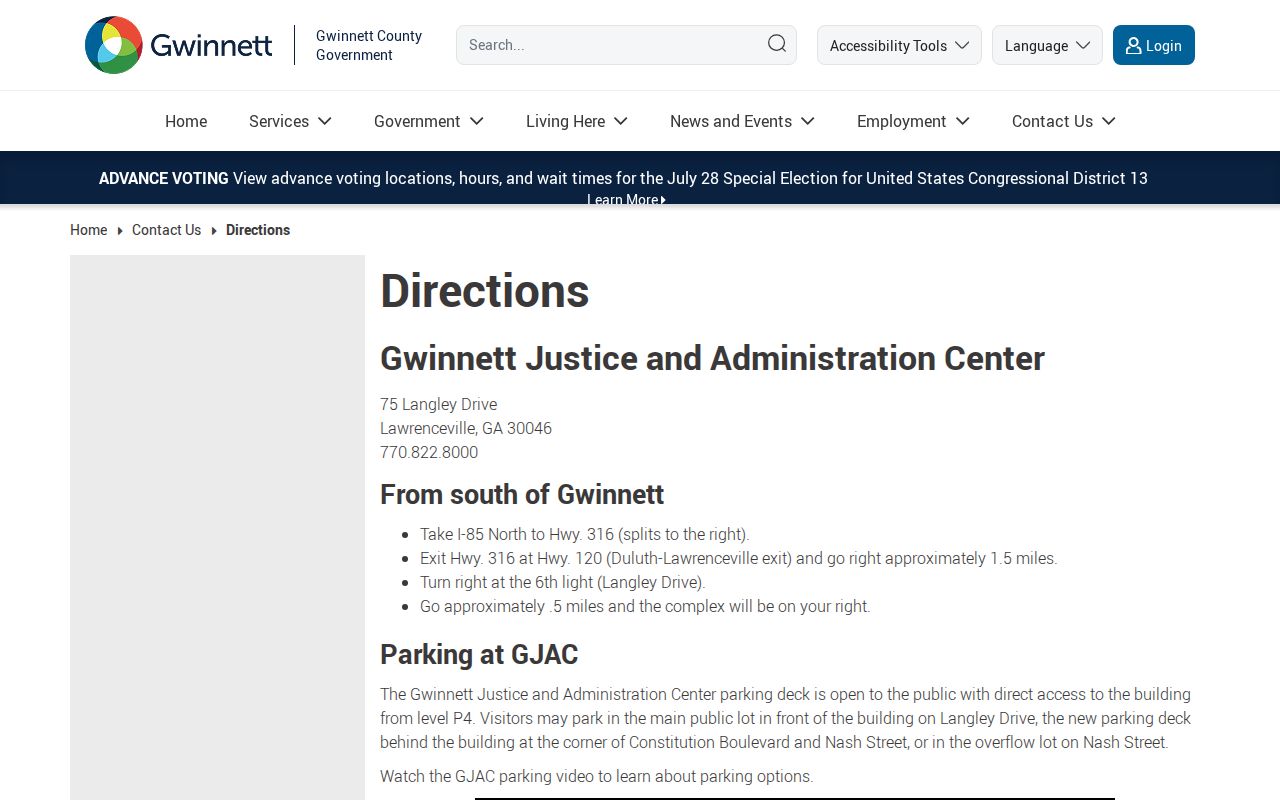
The practical rule is simple: GJAC for court dockets and copies, University Parkway for jail custody, a police counter for reports, and the proper prosecutor for restriction decisions.
Gwinnett Courts
75 Langley Drive
Lawrenceville, GA 30046
770-822-8100
Sheriff and Jail
2900 University Parkway
Lawrenceville, GA 30043
770-619-6500
GCPD Innovation Square
446 West Crogan Street, Suite 102
Lawrenceville, GA 30046
678-377-4300
City-by-City Criminal Records in Gwinnett County
The county's three largest incorporated cities require different routing. Peachtree Corners uses Gwinnett County Police, so its police reports follow county channels while municipal citations stay with the city court. Duluth and Lawrenceville operate their own police departments and municipal courts. Their incident reports remain city records, even when an arrest later creates a county jail booking and a Superior or State Court case.
Peachtree Corners Record Check
42,638 in the 2024 estimate. GCPD handles primary police service; the city court handles local cases.
Duluth Record Check
33,157 in the 2024 estimate. Duluth Police and Municipal Court maintain distinct city files.
Lawrenceville Record Check
31,877 in the 2024 estimate. City police, municipal court, county courts, and jail are separate custodians.