
Criminal Court Cases in Gwinnett County
Gwinnett County Superior Court has exclusive felony jurisdiction. State Court hears misdemeanors prosecuted by the Solicitor-General. Magistrate Court handles warrants, first appearances, preliminary functions, and limited criminal matters. Recorder's Court keeps a separate docket for county ordinance and traffic cases, while municipal courts hold qualifying city cases. The Clerk of Superior, State and Magistrate Courts is the custodian for the main county case files at the Gwinnett Justice and Administration Center, or GJAC.
This split matters. A police report or jail booking is not the court file. The file begins when a charge is lodged with a court and grows through pleadings, hearings, orders, disposition, and sentence. If a name appears in Jail View but not in the clerk portal, the filing may lag the booking or another court may own it.
Choose the Right Gwinnett Court
Start with the alleged offense and the agency shown on a citation or booking. Felony filings belong in Superior Court; state misdemeanors generally go to State Court. A GCPD traffic or county ordinance citation may be in Recorder's Court. A citation from Duluth or Lawrenceville can remain in that city's municipal court.
The Gwinnett Clerk case-search gateway shows the correct routing choices. Its screen is a useful reminder that Recorder's Court cases live behind a different door.
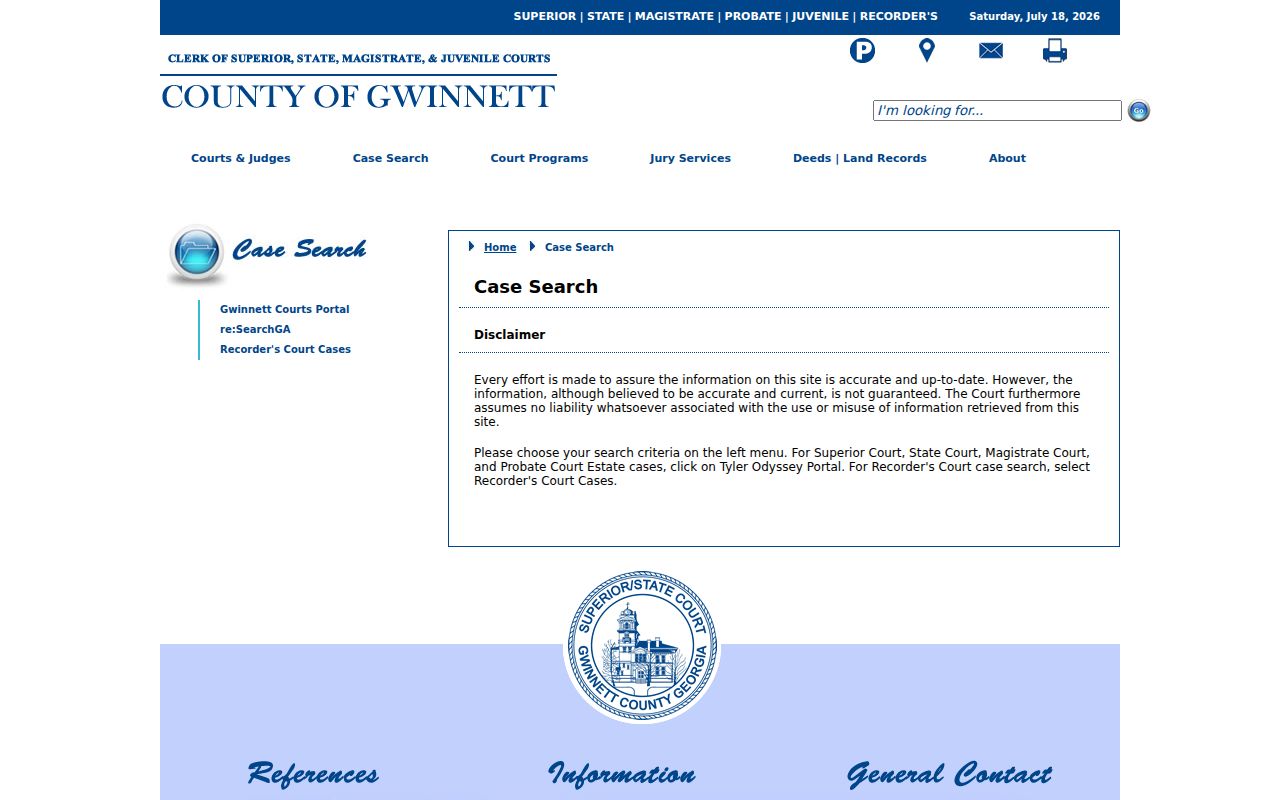
The gateway keeps a searcher from assuming one county portal covers every Gwinnett County criminal court case.
Gwinnett County Case Record Searches
The principal Tyler Odyssey portal requires a free account, JavaScript, cookies, and a current browser. Account access has been mandatory since March 3, 2023. Because its live search fields sit behind that gate, use only the controls shown after sign-in and do not assume a field is required.
- Open the clerk's case-search page and choose the correct court route.
- Register or sign in when Tyler Odyssey requests an account.
- Search with the case number when known, or use the party name and filing details.
- Confirm the court, filing date, charge, and party before reading the register of actions.
- Request a plain or certified copy from the Clerk when the docket alone is not enough.
| Search detail | How to use it | Caution |
|---|---|---|
| Case number | Best key for one filed matter | Keep the court prefix and year |
| Party name | Useful when no number is known | Verify middle name and other facts |
| Court and filing year | Narrows common names | Different courts can use similar numbers |
| Case type or status | Separates open and closed matters | Status may lag a new filing |
The official Gwinnett Odyssey portal is the account-gated county route.
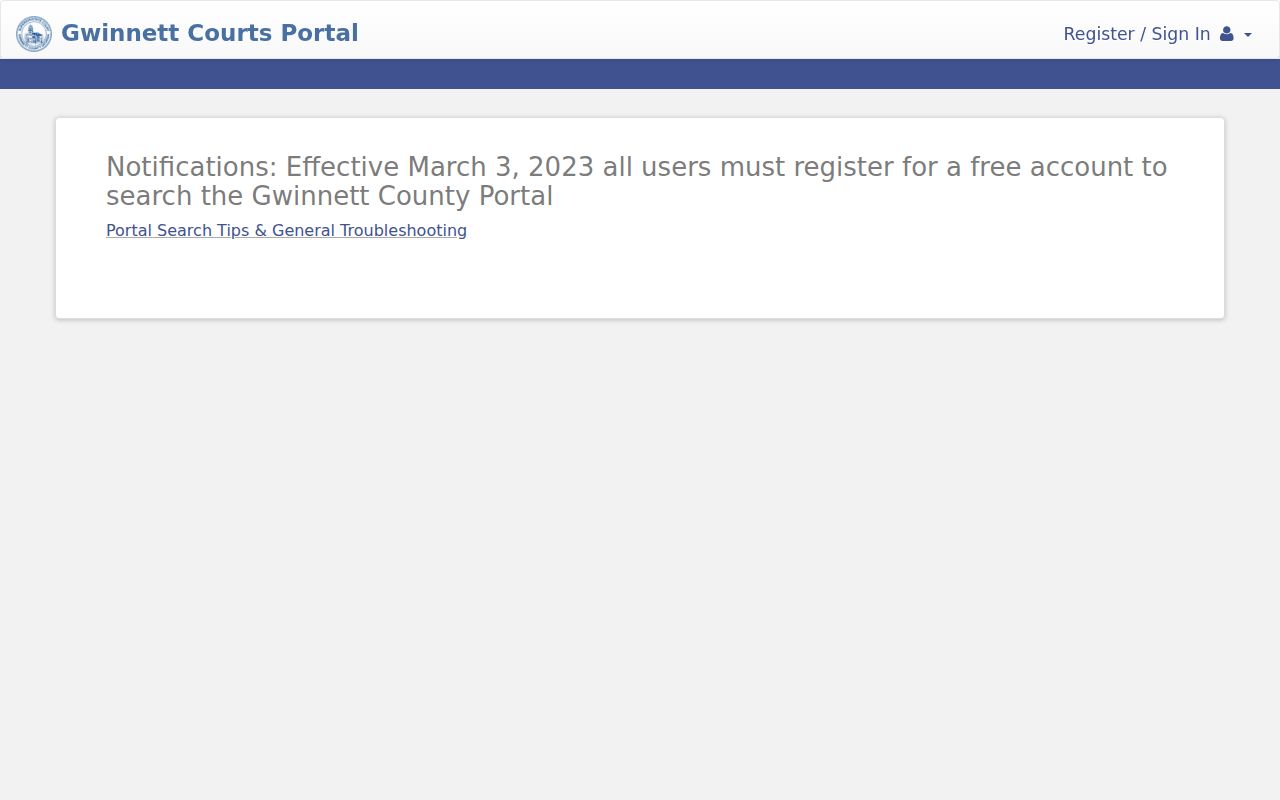
The sign-in barrier explains why a clerk call remains an important access channel.
Gwinnett Recorder's Court Portal
Recorder's Court covers citations from Gwinnett County Police, the Sheriff, Georgia DDS, GDOT, and county ordinance enforcement. Its eCourt site offers Case Search apart from the main Odyssey system. A reader who searches only Odyssey may therefore miss a county traffic or ordinance matter.
The Recorder's Court public portal is the official second route.
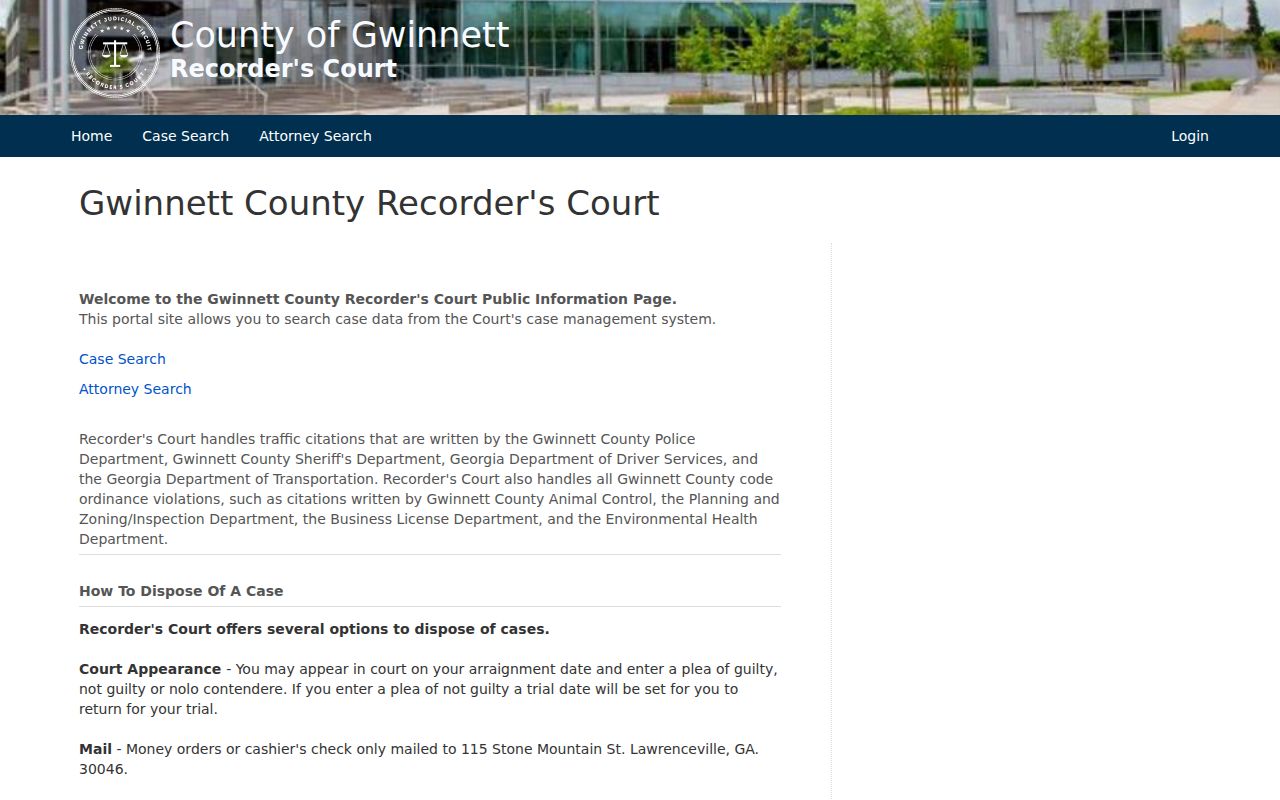
For help, contact Recorder's Court at 877-794-0988 with the name, citation or case number, and telephone number. The counter is at 115 Stone Mountain Street in Lawrenceville and operates Monday through Friday, 8:00 a.m. to 5:00 p.m.
What a Criminal Case File Contains
A Gwinnett County criminal case file may combine allegations, court events, outcomes, and financial entries. Read each charge separately because counts can end in different ways.
| Case and court | Case number, location, filing date, case type, and status |
|---|---|
| People | State and defendant names, attorneys, and judicial officer |
| Charges | Count, description, offense date, and charging instrument |
| Docket | Filings, motions, events, scheduled hearings, and register-of-actions text |
| Outcome | Disposition, disposition date, judgment, and sentence |
| Other entries | Bond, warrant or capias events, and assessments when public |
Full dates of birth, Social Security numbers, victim or minor data, sealed documents, and sensitive filings are withheld or redacted. A missing field is not proof that the event did not occur.
Read Gwinnett Docket Outcomes
An accusation is a prosecutor's formal charging paper often used without an indictment. An indictment is a grand jury's true bill. A no bill means the grand jury declined the charge. “Nolle prosequi” means the prosecutor formally stopped pursuing it, while a dead docket suspends the case rather than producing the same final result as an acquittal.
Read the disposition for every count. Dismissed, acquitted, First Offender discharged, and convicted are materially different. If the docket has no disposition, call the Clerk at 770-822-8100 and provide the case number. A missing court outcome can also leave a GCIC arrest cycle incomplete.
Criminal Case Stages in Gwinnett County
A case may begin with arrest or citation, followed by first appearance and bond review. The prosecutor then proceeds through accusation or indictment. Arraignment records the formal charge and plea. Discovery and motions follow. A negotiated plea or trial produces judgment, then sentence, and an appeal may add a later record.
Case flow: Charges Filed › Arraignment › Pretrial › Plea or Trial › Disposition › Sentencing
Dates can move, and charges may change after prosecutor review. Use the register of actions as a timeline, then open the underlying order when exact terms matter. For context about the earlier custody record, the county arrest search explains how booking differs from filing.
Gwinnett Clerk Copies and Certification
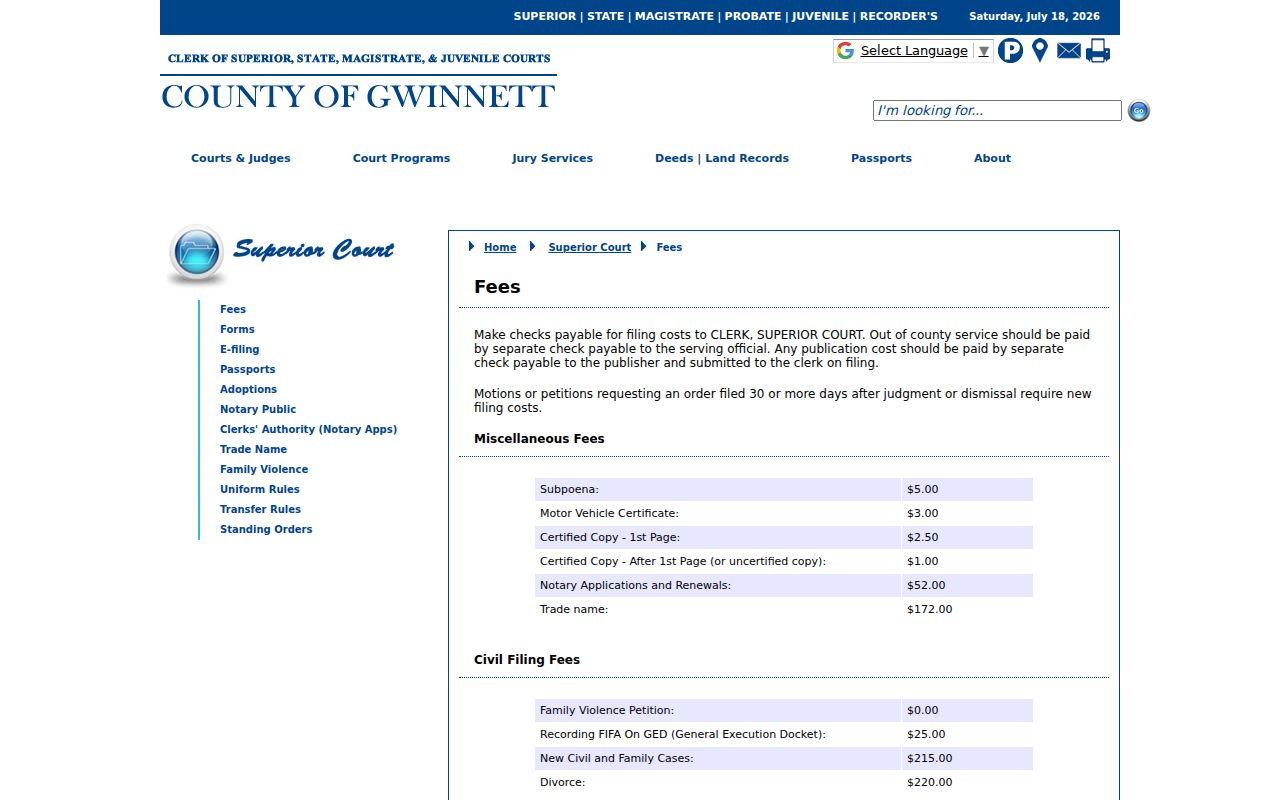
A screen print may help with research, but it is not the same as a clerk-certified record. Gwinnett's published Superior Court schedule lists certified copies at $2.50 for the first page and $1 for each later page. An uncertified copy is listed at $1 per page. Confirm the charge and whether archives add a cost before ordering.
The Clerk's Superior Court fee page is the source for the posted schedule.
GSCCCA eCertification can also provide tamper-evident, self-validating secured PDFs around the clock, subject to its purchase process.
re:SearchGA Document Access
Odyssey can identify a case even when a document image is not freely visible. re:SearchGA is the separate purchasing layer for available electronic documents. It may require an account and charge document fees. Restricted or unavailable filings do not become public merely because the service sells other images.
The Georgia courts electronic-access page explains official access routes and account cautions.
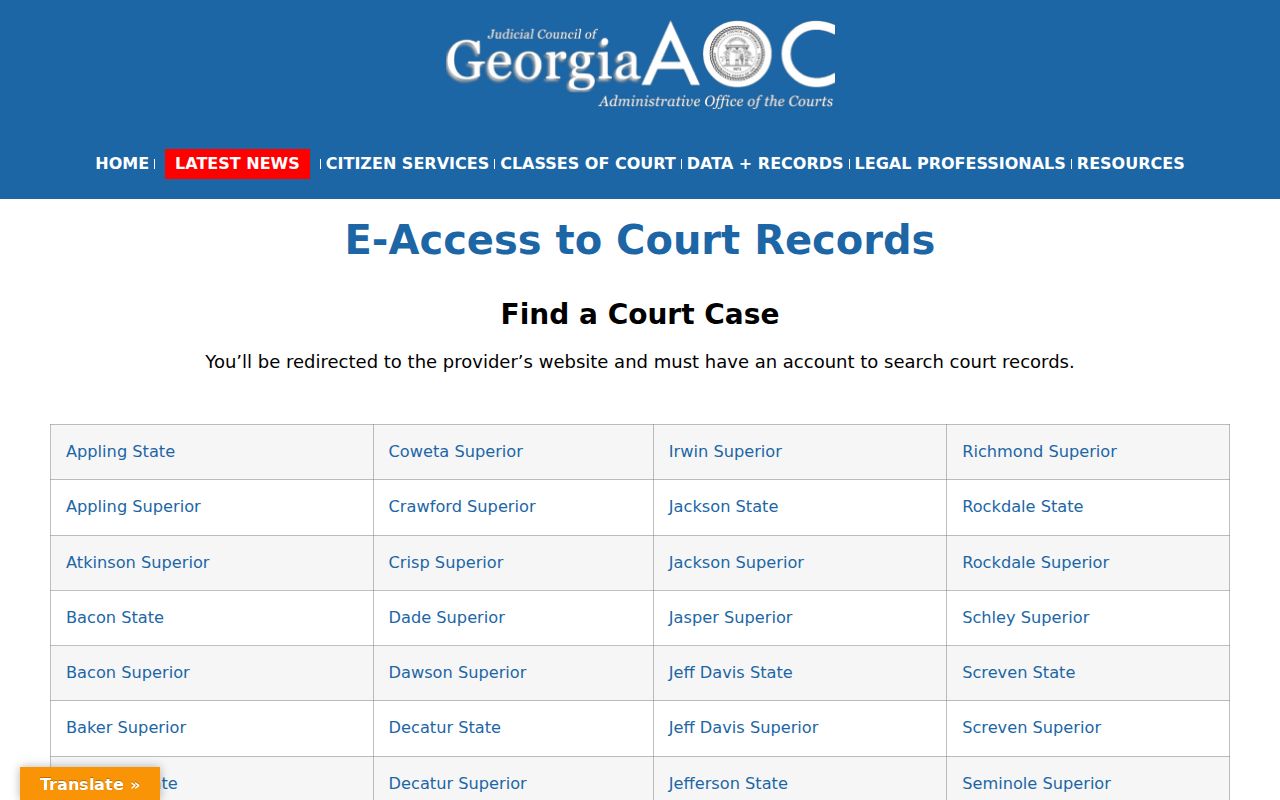
Use the Clerk counter at GJAC when an online image is absent or a certified paper is needed.
Access Rules for Case Records
Georgia court records generally begin with a public-access principle, but that does not open every page. Uniform Superior Court Rule 21 allows a court to limit access when privacy harm clearly outweighs public interest. An order must describe the affected material, reason, nature, and duration. Juvenile matters, protected identifiers, victim information, sealed files, and sensitive exhibits may remain unavailable.
Do not send Superior, State, or Magistrate court-copy requests to the county Open Records Portal. The county expressly redirects those requests to the Clerk. Georgia record restriction also does not automatically erase courthouse paper. A qualifying GCIC history may be restricted while a public court file remains unless a judge separately seals it.
Federal Cases Affecting Gwinnett County
A federal prosecution is not in the Gwinnett Clerk portals. Gwinnett lies in the Northern District of Georgia, and PACER is the official federal docket system. It requires registration and applies the judiciary's current electronic-access fees, with its stated low-usage waiver and caps.
The PACER access page leads to federal court registration.
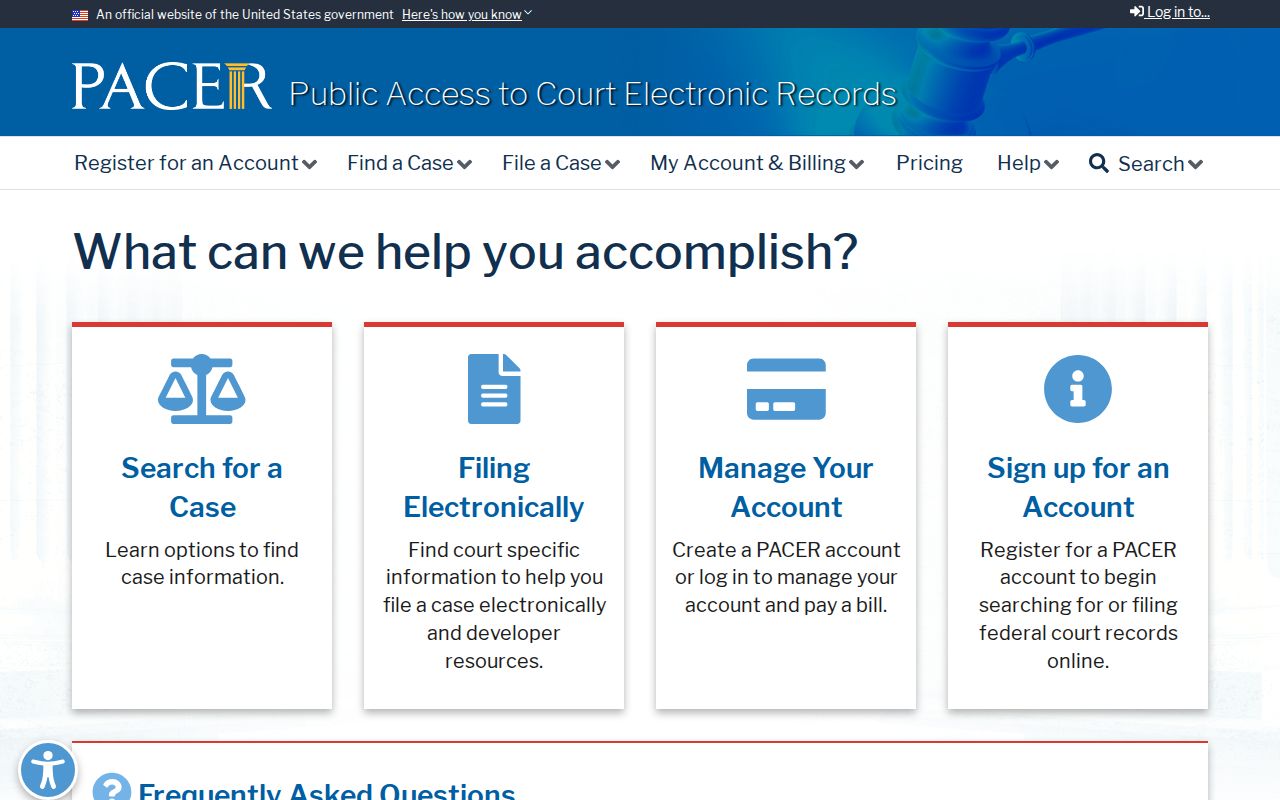
PACER is a docket source, not a county booking search or an FBI identity-history request.