
Gwinnett County Sex Offender Checks
The Georgia Bureau of Investigation and its Georgia Crime Information Center manage the statewide public registry under O.C.G.A. §42-1-12. The Gwinnett County Sheriff collects, verifies, and updates local registration information. That shared model means GBI provides the search layer, while local questions about a Gwinnett registration belong with the Sheriff's Sex Offender Unit.
GBI warns that source-agency data changes often and does not guarantee completeness or accuracy. Use registry information for personal, family, and community safety. A search result should be checked against the full profile, and an apparent error should be reported through official channels.
Search Gwinnett County in GBI
The official Georgia registry search supports name, county, city, ZIP, and address-based approaches.
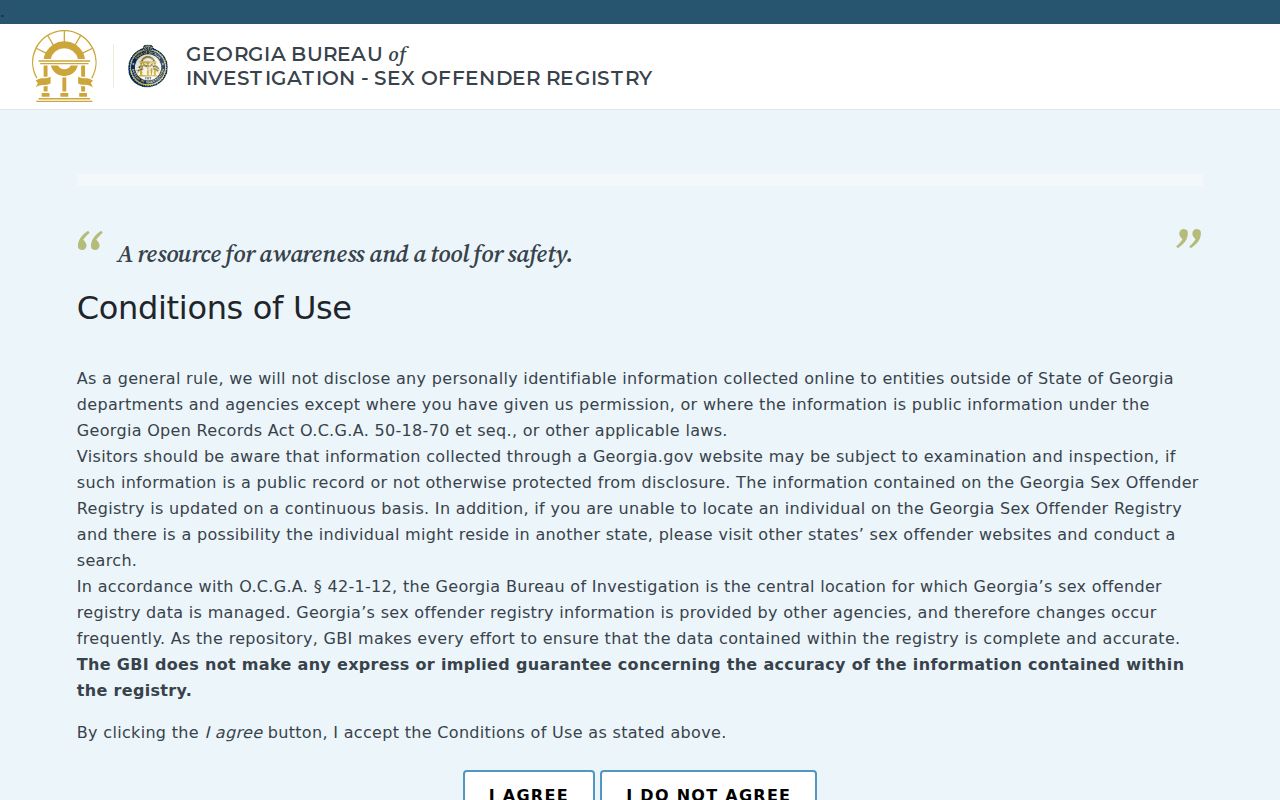
The interface is the direct statewide source. Select Gwinnett rather than relying only on a postal city, since mailing names and county lines can mislead.
- Read and acknowledge the registry warning as presented.
- Choose name or location mode based on the question.
- Enter a precise spelling, or select Gwinnett County for a local list.
- Use address and radius controls carefully for nearby locations.
- Open the full profile and check status, address, offense, and classification.
- Contact the Gwinnett Sheriff if data appears wrong or noncompliance is suspected.
| Search field | Mode | Use |
|---|---|---|
| Last and first name | Name | Spelling matters; first name narrows |
| County | Location | Select Gwinnett for county results |
| City and ZIP | Location | Use as narrowing tools |
| Address | Map | Enter a location accepted by the map |
| Radius | Map | Use only current displayed distances |
Georgia Registry Gateway and Cautions
The GBI service page links the search, supporting material, downloads, and reporting information. It also places the registry in context: records come from local registration and can change after a move, correction, new submission, or legal status change.
The GBI Georgia Sex Offender Registry gateway is the official explanatory source.
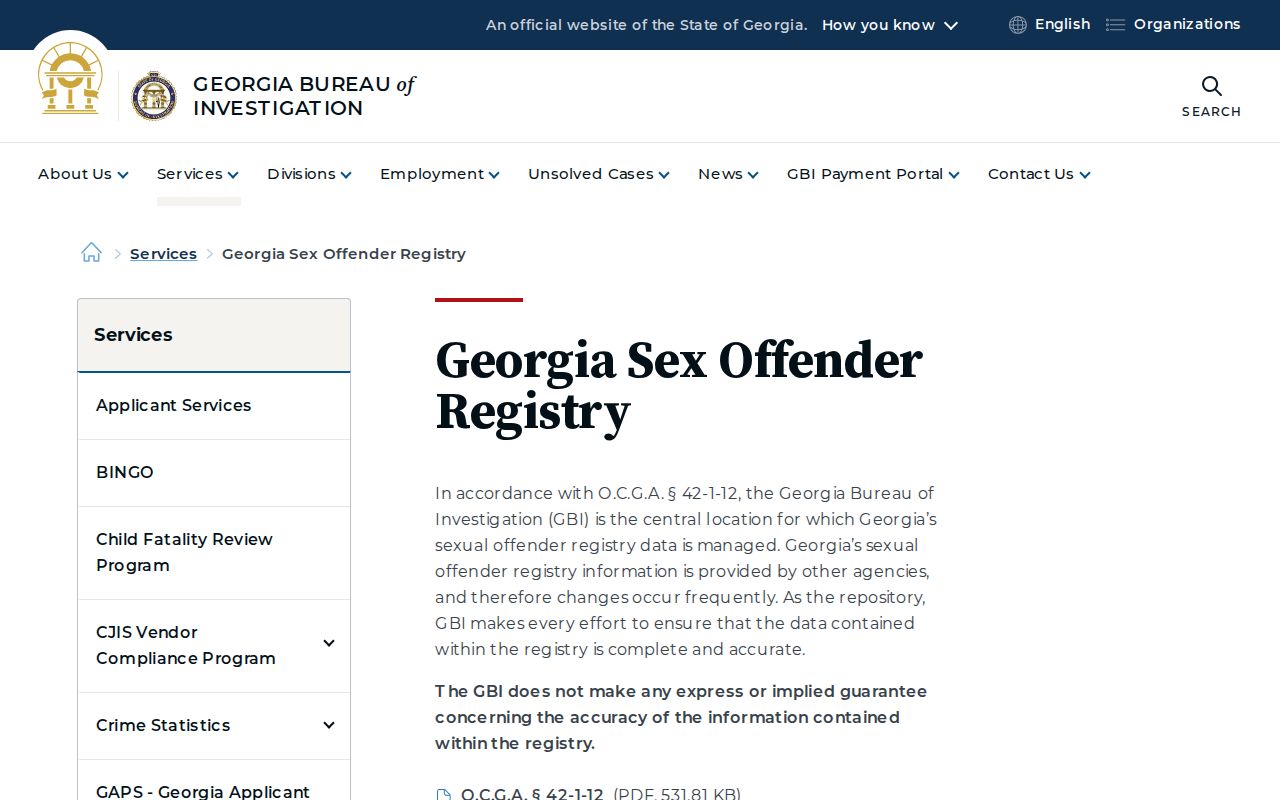
Use its caution before drawing a conclusion from a missing result, an old address, or an incomplete-looking profile.
Registry Profiles: What They Show
A public profile joins identity, location, offense, and registration fields. Not every record displays every possible field, and absence should not be treated as a negative answer.
| Identity | Name, aliases, photograph, gender, race, height, weight, hair and eye color |
|---|---|
| Birth and marks | Year or displayed DOB and scars, marks, or tattoos |
| Location | Residence, registration county, and sometimes secondary address |
| Status | Registration status, classification, or custody information |
| Offense | Description, statute, conviction date and jurisdiction, victim-age category when authorized |
| Other public fields | Vehicle information and institution status when supplied |
Compare the name, aliases, physical details, and offense jurisdiction before assuming identity. A photograph can age, and a map point does not by itself describe a person's daily movements.
Gwinnett Address Radius Searches
An address-radius result is a point-in-time map of registered addresses in the selected distance. It does not measure risk at a home, predict conduct, or prove that every person who spends time nearby appears there. Postal city labels can also differ from municipal boundaries.
Use the smallest useful area, open each relevant profile, and read the classification and status rather than counting map markers alone. If the map and written address conflict, contact the local unit instead of trying to investigate in person.
Registration Levels and Duties in Georgia
Georgia uses risk classifications, not a simple public chart of federal duration tiers. The Sexual Offender Registration Review Board may assign Level I, Level II, or Sexually Dangerous Predator status under O.C.G.A. §42-1-14.
| Classification | Meaning | Duration and visibility |
|---|---|---|
| Level I | Low assessed risk of recidivism | Generally lifetime registration; may support statutory relief eligibility |
| Level II | Higher assessed risk | Generally lifetime registration and public profile |
| Sexually Dangerous Predator | Heightened statutory classification | Lifetime framework with added monitoring and notification consequences |
Registration is generally for life, excluding incarceration, unless a court grants limited relief under O.C.G.A. §42-1-19. Older categories and individual orders need case-specific reading. A sexually dangerous predator also has an extra verification six months after the birth month.
Gwinnett Sheriff's Registration Role
Gwinnett registrants report through the Sheriff's designated function at the University Parkway campus. The Sex Offender Unit is available at 770-619-6808 and GCSOSexOffenderUnit@GwinnettCounty.com. Confirm the appointment, identification, and reporting hours before appearing.
State rules generally require registration with the sheriff of the county of residence or sleeping location within 72 hours of release, placement, or entry into Georgia. Annual in-person verification occurs during the 72 hours before the birthday, with photo and fingerprints, and changes generally must be reported within 72 hours. Sheriffs send changes onward, and GBI says updates are normally processed within two business days.
Missing Gwinnett Registry Results
A no-result search is not proof that no duty exists. GBI identifies several explanations: the criteria may be wrong, a new record may not yet have arrived, the person may have died, the offense may carry no Georgia registration duty, or successful First Offender completion may affect appearance. Juveniles do not register unless tried and convicted as adults.
The GBI registry FAQ explains these limits and registration rules.
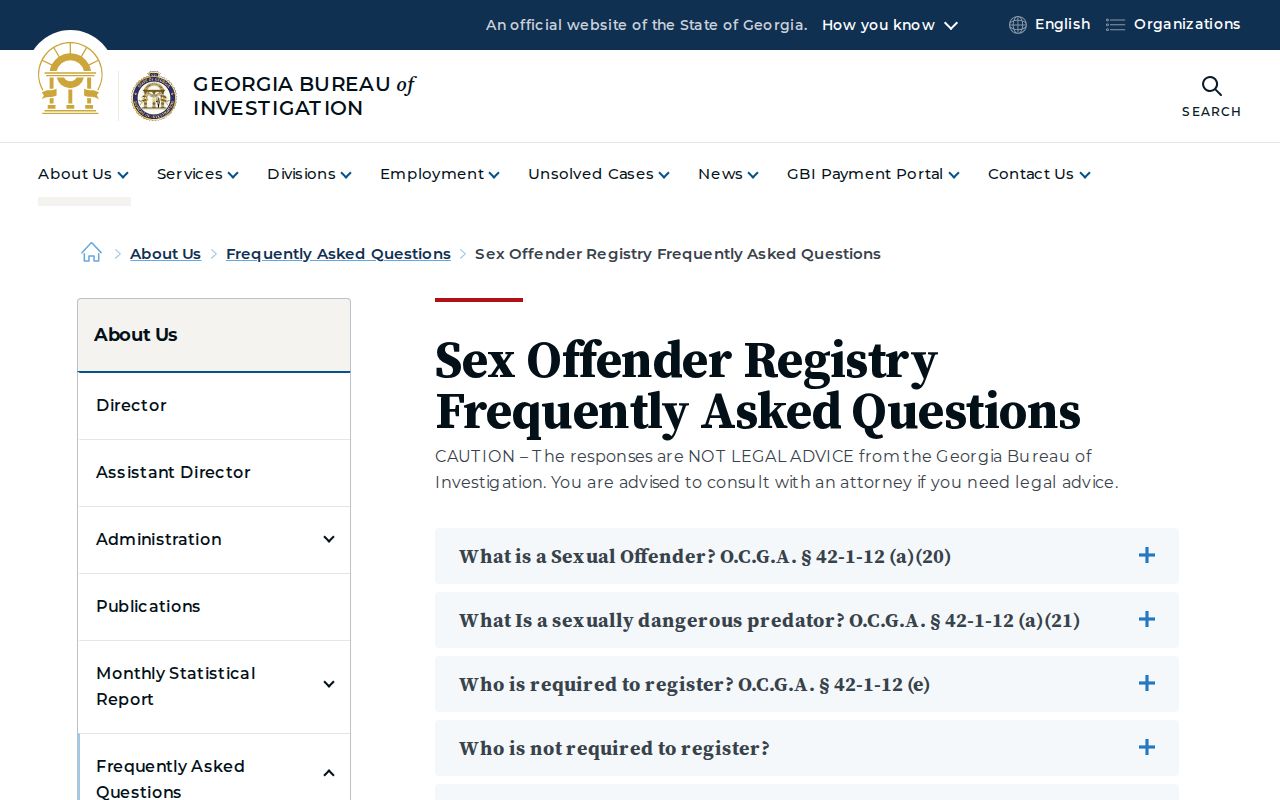
Try a corrected spelling or location method, then ask the Sheriff about a Gwinnett-specific concern.
NSOPW Beyond Gwinnett County
A Georgia-only search can miss a record maintained in another state, territory, or tribal jurisdiction. The U.S. Department of Justice National Sex Offender Public Website, or NSOPW, provides the official cross-jurisdiction layer.
The NSOPW national search is useful when a search crosses state lines.
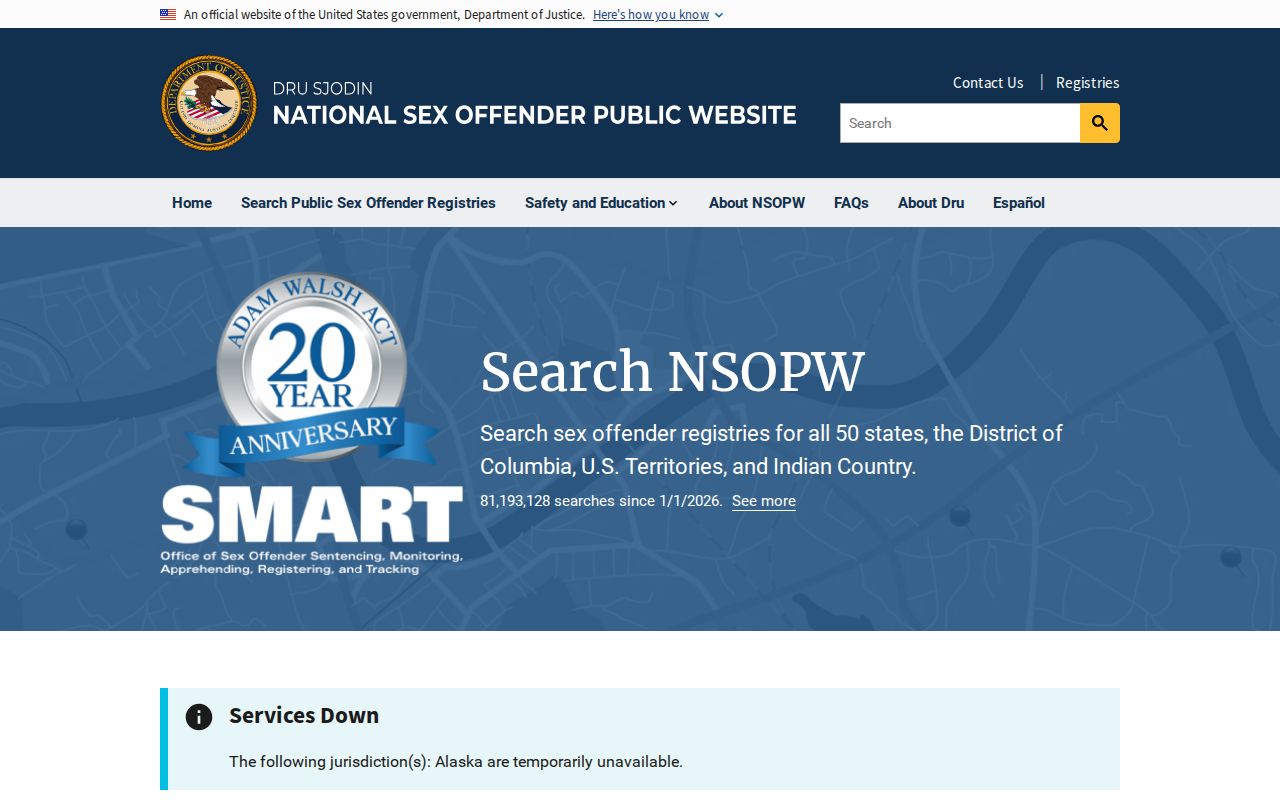
Open the source jurisdiction's profile for details because participating systems can use different labels and update schedules.
Using Registry Information Lawfully
Registry information supports awareness and safety planning. It does not authorize a resident to follow, question, threaten, expose, or punish another person. Report suspected noncompliance to the Sheriff or GBI without confrontation. Call 911 for an emergency.
Misuse is a crime: O.C.G.A. §42-1-12 warns that registry information must not be used to harass, intimidate, or commit a crime against a registrant or household.
Keep a note of the official profile and the field that appears wrong. Share that with the agency instead of publishing accusations. The registry's own accuracy warning matters because a move or recent update can create a short gap between local reporting and public display.
Restriction Does Not End Registry Duties
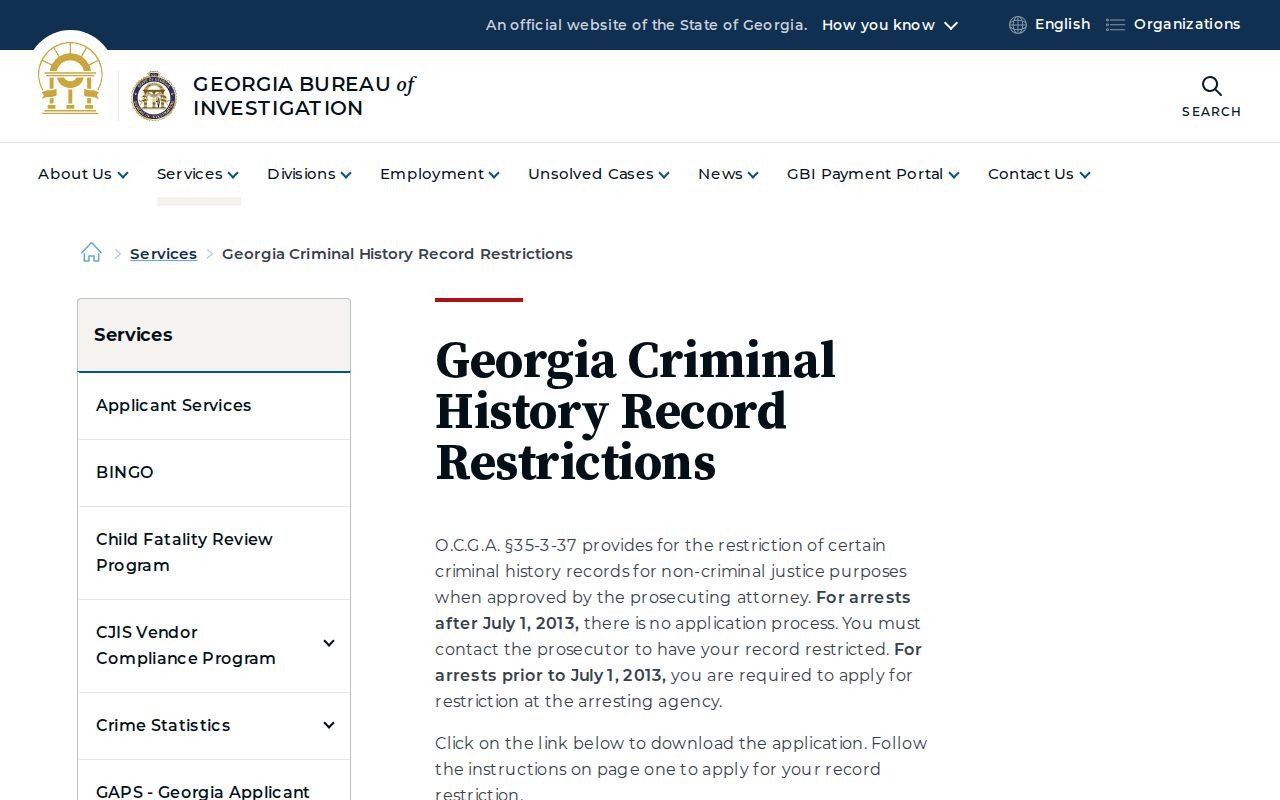
Georgia record restriction limits public dissemination of qualifying criminal-history information; it does not destroy the record or automatically cancel a separate registration duty. First Offender status and later relief depend on the exact disposition and governing law.
The GBI record restriction page explains the separate history process.
Use the sentencing court and official registry channels for a case-specific status question rather than inferring relief from a hidden arrest cycle.
Confirm Identity Through Official Records
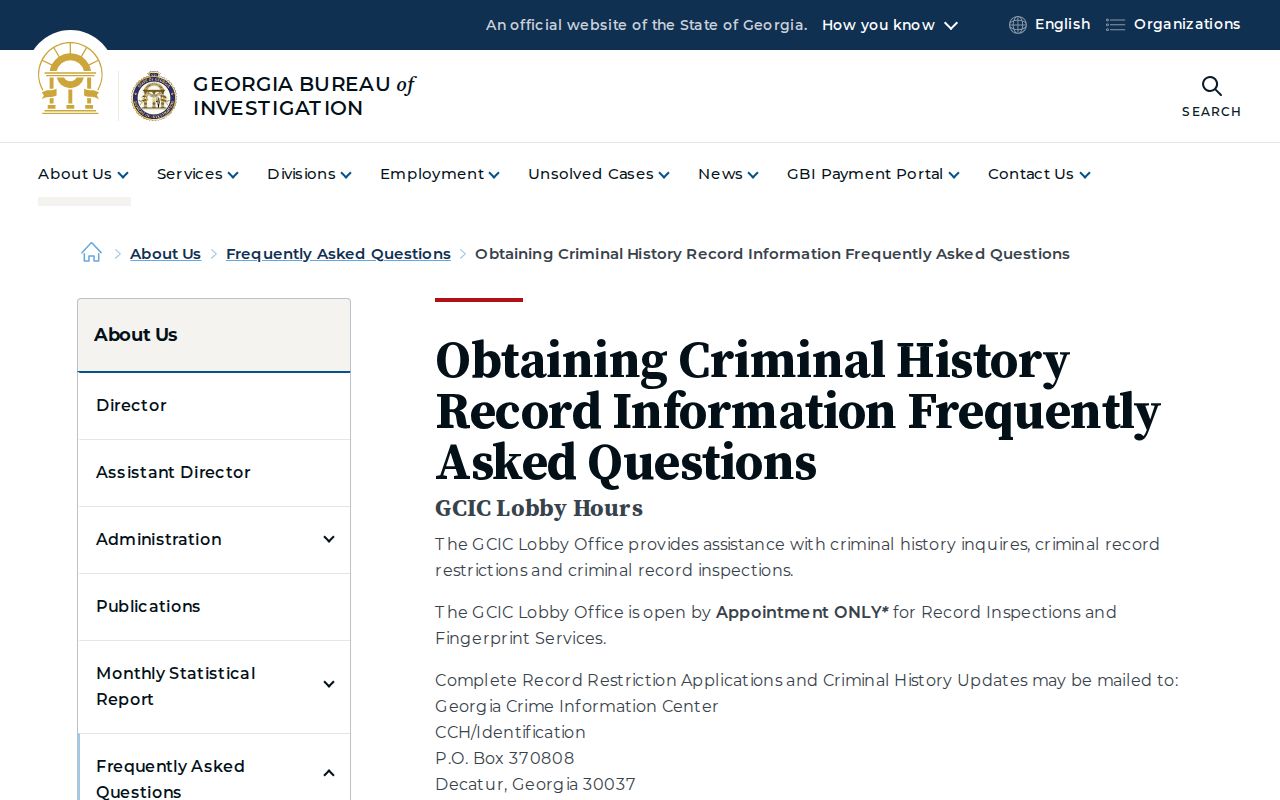
A registry profile is not the same as a full GCIC history. GBI's criminal-history guidance explains what a Georgia history can contain and how a person may review or correct their own record. The GBI criminal history FAQ is the official starting point.
For a court outcome behind a profile, use the Gwinnett court case lookup and verify the filing court, disposition, and sentence.
When a profile appears wrong, save its official link and note the field at issue, such as an address, vehicle, status, or classification. Contact the Sheriff's unit for locally maintained data and GBI for the statewide display. Do not visit the listed address, question neighbors, or publish an accusation. A short gap can occur between local reporting and public display. Report suspected noncompliance without confrontation and use 911 only for an emergency.