
Duluth Criminal History Checks
A useful Duluth record check follows the event from the city agency to the office that holds the next stage. Begin with Duluth Police for an incident or arrest report created by its officers. Move to Municipal Court for a city ordinance or qualifying traffic case. Use the sheriff and county clerk only when custody or prosecution has moved beyond that city file.
- Read the report, citation, or notice to confirm Duluth Police was the responding agency.
- Request the incident or arrest narrative from Duluth Police Records with the report number, date, location, and involved party.
- Search or contact Duluth Municipal Court for city citations, ordinance matters, and its limited-jurisdiction cases.
- Check the Gwinnett sheriff's booking system and county court portal after a custodial arrest or county filing.
- Use an authorized Georgia history or Georgia Felon Search only when the question extends beyond one Duluth event.
Do not treat the five channels as duplicate copies. Each is a separate record made for a different purpose.
Request Duluth Police Records
Duluth Police is the correct custodian for its incident narratives, local arrest reports, and city-police open-records material. A strong request names the requested record type and gives the report or incident number when known. Add the event date, location, involved party, preferred delivery method, and whether a certified copy or media is sought. Those details let the Records Unit distinguish a report from video, photographs, or other evidence.
Use the official Duluth Police gateway to confirm the current form, submission route, fees, and counter instructions. Redactions may protect juvenile information, victim data, personal identifiers, active investigative material, and security-sensitive content. A city request should remain with Duluth rather than being sent to Gwinnett's county portal merely because Duluth lies in Gwinnett County.
Records at the Duluth Police Department
Duluth Police maintains the first local account when its officers respond. That account can include the call or incident classification, officer narrative, event date and location, involved persons, property details, and arrest information. The Records Unit also controls the releasable copy, while the investigating unit may still hold material that is not ready for public release.
The department has a long local history. City materials marked roughly a century of service when its chief retired in 2022 and reported 91 staff, 162 city cameras, Citizens on Patrol, camera monitoring, and citizen-police-academy work at that time. Those facts show why a Duluth incident may produce several kinds of city-held material. They do not mean all camera or investigative records are automatically open.
Duluth Police Records
Use the official department page for the current request form, records counter, phone, fees, and delivery choices.
Duluth Reports Stay with the City
A common routing error is asking Gwinnett County for a Duluth Police narrative. The county's centralized Open Records Portal lists county departments, but a municipal police department remains a separate custodian. If Duluth Police wrote the report, start with Duluth. If GCPD or another agency responded near a boundary or through mutual aid, follow the agency name printed on the report number.
Booking and prosecution files are different. The Gwinnett sheriff can hold a jail entry after a Duluth arrest, and the Gwinnett clerk can hold a later felony or state misdemeanor case. Neither substitutes for the officer's narrative. Ask for the city report when the facts of the encounter matter, then use the county systems to follow custody and court disposition.
Booking and Arrest Records in Duluth
After a custodial Duluth Police arrest, booking generally occurs at the Gwinnett County Jail on University Parkway. Duluth Police keeps the city arrest narrative; the sheriff creates a custody record with booking details. A magistrate may then address probable cause and bond. Prosecutors later decide whether and what to file.
The official Gwinnett Jail View is the direct source for current or recent county custody. Search by name and booking date. A missing result can reflect release, transfer, spelling, timing, or state custody. It should not be read as proof that no Duluth arrest occurred. Once charges are filed, the Gwinnett Courts Portal may show the county docket. Booking charges can change, so the court disposition is the stronger source for the final outcome.
Follow a Duluth Booking Forward
The record trail has a sequence. Duluth Police creates its arrest file. The sheriff records intake, custody status, and release or transfer. The District Attorney handles felony charging, while the Solicitor-General prosecutes State Court misdemeanors. The clerk opens a court docket after filing. GCIC may later receive the arrest cycle and final disposition for a fingerprintable matter.
When a person has left Jail View, search the county court system rather than assuming the record vanished. If the docket has no disposition, contact the filing clerk and allow for processing lag. If no county case appears, verify the spelling, filing year, and court. The full Gwinnett court case lookup explains the separate Superior, State, Magistrate, and Recorder's Court routes.
Note: A Duluth booking proves custody processing, not guilt or the final charge selected by a prosecutor.
The Duluth Municipal Court File
Duluth Municipal Court has limited jurisdiction over state-law and city-charter or ordinance cases initiated by Duluth Police and Planning/Zoning citations. Official budget materials also describe warrants, subpoenas, probation revocations, bond forfeitures, court records, discovery, and open-record requests within its cases. The court is at 3276 Buford Highway, Duluth, GA 30096, and its published phone is 770-623-2771.
| Court Name | Duluth Municipal Court |
|---|---|
| Case Types Heard | City ordinances, qualifying traffic and limited state-law matters, plus related warrant and probation functions |
| Case Lookup Channel | Official municipal court page or clerk using citation/case number, name, date of birth, or court date as available |
| What the Docket Shows | Citation identity, scheduled events, filed activity, plea, disposition, bond or probation action when part of the case |
| Copies & Fees | Ask the municipal clerk about older files, certification, current vendor access, and cost |
Use the official Duluth Municipal Court page to verify the current lookup and counter process.
Duluth Amnesty Shows Why Dates Matter
Duluth ran a municipal court amnesty program from January 6 through April 30, 2025. It gave people with qualifying failure-to-appear warrants or license suspensions a route to pay eligible obligations or schedule an appearance before a judge. Mandatory-appearance citations still required court handling. The program is useful history, but it was time-limited and should not be described as current policy.
A person addressing an old Duluth warrant should contact the issuing court and confirm the present procedure. Do not rely on an archived announcement or assume a prior waiver remains available. Bring the citation or case number when possible. A current clerk response is more reliable than a stale search result, especially when a warrant, bond forfeiture, or license issue may have changed after the last public update.
How Duluth Records Reach the County
A fingerprintable arrest starts with Duluth Police and can generate a GCIC arrest cycle. The Gwinnett sheriff makes the separate booking record. If prosecutors file a felony, Superior Court receives it. Most county misdemeanors go to State Court. A municipal citation can remain in Duluth Municipal Court instead.
Record flow: Duluth Police Department › Gwinnett County Jail and Courts › Georgia Bureau of Investigation, Georgia Crime Information Center
Final dispositions are returned by courts and prosecutors so GCIC can complete the state cycle. Timing gaps are normal. A recent Duluth report may exist before the jail screen updates, and a booking may appear before a county case has been filed. Search in sequence and keep the same name, birth date, incident number, citation number, and case number tied together.
Duluth Municipal or County Case?
The court named on the citation or filing is the best answer. Duluth Municipal Court handles its own limited city matters. Gwinnett State Court handles state misdemeanors filed there, and Superior Court has exclusive felony jurisdiction. Recorder's Court is another county venue for citations from GCPD, the sheriff, Georgia DDS, GDOT, and county ordinance enforcement.
A city charge can also lead to a separate county case when facts support an offense outside municipal jurisdiction. Search both only when the paperwork or prosecutor's action gives a reason. Certified paper must come from the court that filed the document. A Duluth clerk cannot certify a Gwinnett Superior Court disposition, and the county clerk cannot certify a Duluth municipal docket that it does not maintain.
Duluth History and Records Geography
Duluth grew from a railroad community into a dense metropolitan city with a distinct downtown and a diverse population. Its historic core helps explain why modern municipal services sit within a compact civic area, but old landmarks are not current record repositories. The preserved 1908 Calaboose, for example, reflects an early local confinement era. Modern arrest records go to Duluth Police and the Gwinnett sheriff.
The official Duluth city website provides a visual and civic reference for the city government that maintains municipal records.
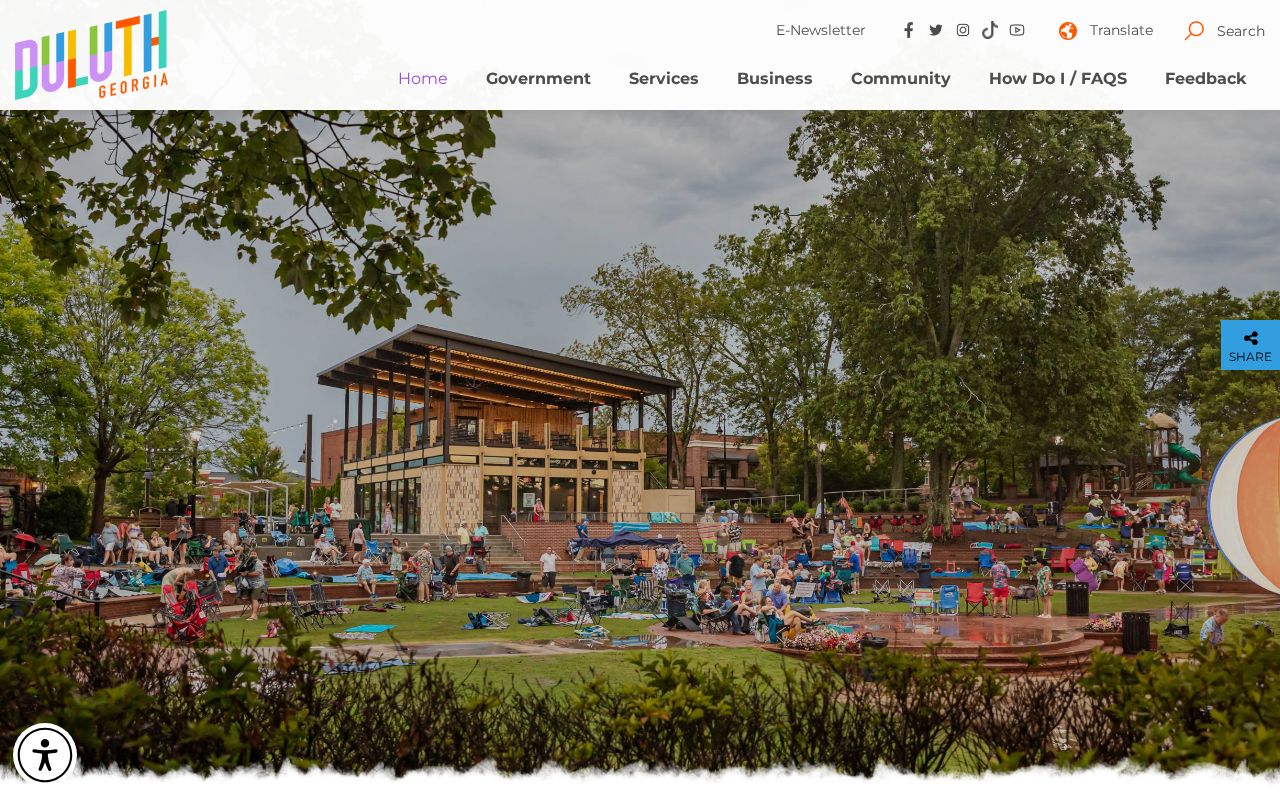
The image ties the municipal setting to the correct city channels, while county custody and prosecution remain with Gwinnett offices.
Read Duluth Crime Numbers Carefully
Duluth Police incident statistics measure reports known to that agency for a stated period. They are not counts of convictions. They also should not be compared without care to GCPD figures for unincorporated Gwinnett or to countywide court filings. Use the same reporting year, offense definition, and agency population when drawing a trend.
A 2023 Duluth enforcement event illustrates the distinction. The city reported 27 citations, two arrests, and five towed vehicles under street-racing and reckless-driving-exhibition enforcement. Citations, arrests, impounds, filed charges, and convictions are separate measures. A person researching one of those stages must go to the office that created it rather than treating the event summary as a court result.
Duluth Record Access Rules
The Georgia Open Records Act applies to existing Duluth city records, subject to lawful redaction and withholding. An agency generally must answer within three business days by producing the record, giving a timetable and cost estimate, or citing the legal basis for withholding. The deadline governs the response, not guaranteed completion of every large request.
Active investigative content, protected victim information, juvenile material, personal identifiers, and security-sensitive records can be limited. Municipal court files should go to the court custodian. A county court file should go to the Gwinnett clerk. State criminal-history dissemination follows separate GCIC statutes and consent rules.
Key Statutes:
Georgia Open Records Act, O.C.G.A. §§50-18-70 through 50-18-77 requires prompt access or a written lawful response.
O.C.G.A. §35-3-35 governs authorized dissemination of Georgia criminal-history information.
O.C.G.A. §35-3-34(d.2) supports the limited public Georgia felony-conviction search.
Keep a request narrow, give the identifiers the custodian needs, and ask the clerk directly when a court document is the goal.